Friday, February 15, 2019

THE PINEAPPLE EXPRESS

The usual placid waters of Lake Natoma bolster a fast current now with releases coming down from Folsom Dam.
A Pacific storm system known as the “Pineapple Express” blasted California earlier this week dumping waves of water and snow across the west coast region raising risks of flooding and mudslides.
Drawing its name from a weather phenomenon that periodically heads east in long and narrow bands of water vapor formed over an ocean adjacent to the Hawaiian Islands this past weather system was one of season's strongest in series of storms this winter.

“The (Pineapple) Express is no joke,” Bob Oravec, a meteorologist with the National Weather Service’s Weather Prediction Center in College Park, Maryland told Reuters. "We're talking 3 to 5 inches of rain in San Francisco and coastal areas."
Those torrential rains beginning last Tuesday shattered daily precipitation records in Sacramento and led to flash-flood watches across the region. Water releases from Nimbus and Folsom dams increased as the storm moved through the region.
While at Lake Tahoe a winter storm warning from the National Weather Service in Reno remained in effect for much of the week as some ski resorts on Thursday morning did report over a foot of fresh snow.

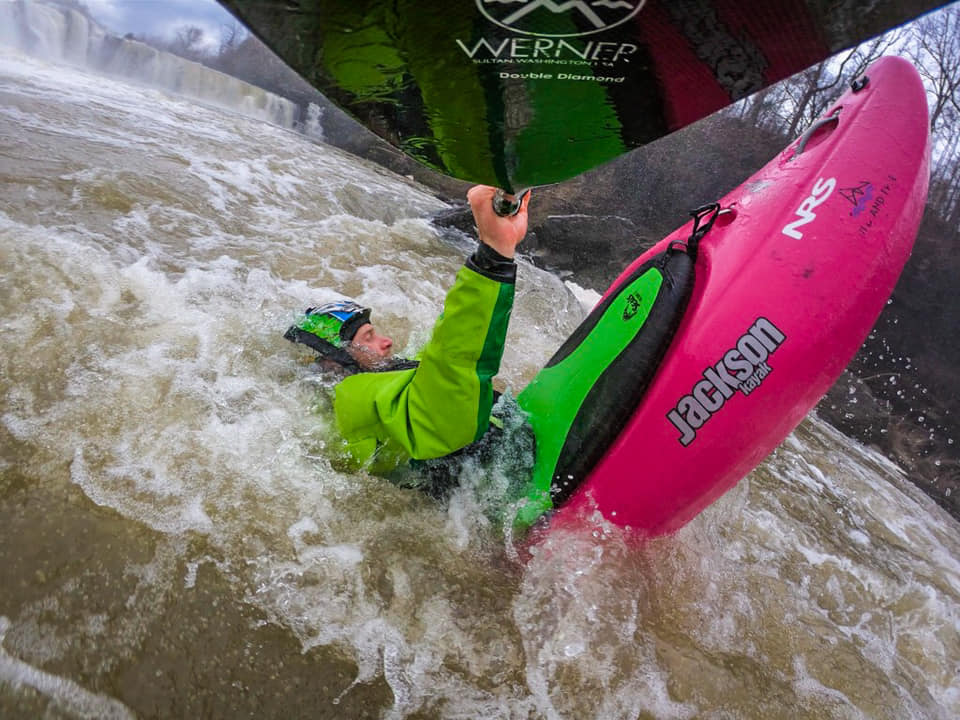
The snow is great news for those heading to the Lake Tahoe slopes. The latest in winter storms have increased snow depth at area ski resorts to above-average levels delighting would-be skiers looking for fresh powder. While whitewater kayakers like world-class kayaker Carson Lindsay know that the higher snow means the bigger the water come springtime.
"I’m not only looking forward to some bigger flows in the rivers this spring during the peak runoff but also longer and more sustained flows into the summer as the snow melts!" said Lindsay, "My friends and I have our eyes on some epic whitewater missions and adventures this spring.

The biggest winner however just might be California's water supply which has face uncertainty over the past decade. The snowpack, where the state gets one-third of its water supply, always plays a pivotal role as it slowly melts filling the state's reservoirs, rivers and streams. In wet years, the runoff begins in April and can continue to flow through into August. But in years with less snow accumulation, therefore less precipitation, the runoff can run out as early as May.
The latest statistics from the California Department of Water as of Wednesday, the snowpack in the Sierra Nevada has an astounding snow water equivalent of 136 percent of historical average for this time of year. That's a big jump from a month ago when the snowpack was at just 69 percent and huge from just last year when it was at only 18 percent of normal.

Californian boaters are cautiously optimistic those numbers will translate into longer high flows and even bigger summer rapids.
"I'm hopeful this year will be better than last. December was drier than normal, but January was above average, so we're off to a good start," said Shingle Springs, Ca., based photographer and paddler Martin Beebee, "I'm looking forward to having more time to run some of the rivers that are really dependent on the winter rain and snow, such as the North Fork American. The more rain and snow."
Lindsay agrees even though he says that typically with these bigger snow packs it makes access difficult in the higher elevations until much later.
"The weather quite a bit nicer and it helps spread out the season a bit more," said Lindsay, "Also, this will help fill the reservoirs so we can have guaranteed world-class commercial rafting 7 days a week."
Although hopeful, Beebee emphasized the uncertainty of the weather and a past history of droughts over several years.
"It's so hard to tell anymore what's going to happen," said Beebee, "Call me a pessimist, but it could just as easily stop raining and snowing after this next storm and leave us high and dry again. 2017 was really an anomaly in the last decade or so when we've mostly been dry"

Landmark Conservation Bill Protects Nearly 620 Miles of Wild and Scenic Rivers

In a landmark conservation bill, the US Senate earlier this week, passed legislation to protect nearly 620 miles of wild and scenic rivers across seven states from damming and other development. With bipartisan support, the bill is the biggest step forward for Wild and Scenic River designations in nearly a decade.
"The overwhelming local support for these protections are the reason why they are moving through Congress despite the gridlock that usually dominates Congress when it comes to natural resource issues." wrote David Moryc the Senior Director Wild and Scenic Rivers and Public Lands Policy for American Rivers on their website this week.

Some details on the rivers protected compiled by American Rivers:
  • 256 miles of new designations the for tributaries for the Rogue River, the Molalla, and Elk Rivers in Oregon;
  • 110 miles of the Wood-Pawcatuck Rivers in Rhode Island and Connecticut;
  • 76 miles of Amargosa River, Deep Creek, Surprise Canyon and other desert streams in California;
  • 63 miles of the Green River in Utah;
  • 62 miles of the Farmington River and Salmon Brook in Connecticut;
  • 52.8 miles of the Nashua, Squannacook and Nissitissit Rivers in Massachusetts and New Hampshire.

Tour boat will change kayaking at Pictured Rocks


Courtesy of Moran Iron Works Inc.
Paddling at Lake Superior's Pictured Rocks National Lakeshore will get easier for some folks after Moran Iron Works Inc. announced the production of the first-ever kayak launching vessel, designed to take 72 passengers and 36 kayaks. The 64-foot-by-19-foot vessel will be used to take passengers and their kayaks around the Pictured Rocks for guided tours. The custom-designed kayak launch system will be tailored to allow passengers to launch their kayaks offshore once the boat is parked.
Tourism companies on big lakes such as Lake Tahoe will surely take note.


Want to see more about Outside Adventure to the Max. Follow us on Facebook and Instagram

Friday, February 8, 2019

OVER THE BOW; SOUTH FORK OF AMERICAN, VALENTINE'S DAY EDITION

Photo Courtesy of Julie Mitravich
 Unable to perceive the shape of you, I find you all around me. Your presence fills my eyes with your love. It humbles my heart, for you are everywhere. -- The Shape of Water

When we saw Julie Mitravich's wedding photo entitled, "Nothing like getting married in your Pyranha!" on Facebook this past summer, We knew, we wanted to share on Outside Adventure to Max in our Over the Bow series telling the story behind the image. We were hoping to share funny tidbits about being in long term relationships with a paddler, aka, too many boats in the garage, it doesn't matter that it's raining, every day a great day to paddle and the smell of wet neoprene that permeates from the back seat of their car.

But when we reached out to Mitravich, a former employee of Current Adventures Kayak School and Trips,  about sharing the story behind the picture, we received a distinctively different view. She shared her story of two people not only in love but also connected by a strong bond to a sport that brought them together.
We weren't surprised. As Ashley Woodring wrote in Blue Ridge Outdoors Magazine, "This kayaker species certainly has its idiosyncrasies, but what becomes evident very quickly is that they are also some of the most passionate people alive. They have reverent relationships with the natural places on our planet, and that passion for life and nature is only magnified in their relationships with people around them."

So for our Valentine's Day message this year, we are sharing Mitravich's letter as she echoes that same love and passion for her husband, her friends and family and those wild places of the water.

For those who paddle, its a passion beyond simply enjoying the sport. We love to paddle- we always paddle on the weekends, sneak in paddles before and after work, our garages are filled with gear, our cars embody the essence of booties and polypro, and we watch kayaking videos whenever possible. Our friends do the same, and even better, our significant others do as well.

As Ken Kastorff from Endless River Adventures once told my husband "When you meet a girl kayaking on the Grand Canyon, you have already answered the first five questions." I was lucky enough to meet my husband on the Grand Canyon. For those who have been on the canyon, you understand the magic of the canyon.

It changes lives, some more than others, but you definitely never come out the same person. For me, the canyon has always been a treasured place, I believe it is one of the "thin spaces", the veil between heaven and earth.

On my first trip down, everything fell in place and I knew that I wanted to live on the river. After I dropped into Lava Falls and paddled into the eddy to celebrate with the dearest of friends, I had decided to quit my job and move up to Lotus, California. It is that powerful.

A few trips later, I met my husband. In the canyon, you see the real person, how they handle stress and situations, how they act with friends and strangers, how organized they are and how they help out around camp or on the water. Beyond that, the first five questions are answered. We may not all have the same questions but a good guess are that they kayak, they love the outdoors, they enjoy hiking, they have a thirst for adventure and that they can do it all over again for 15 days with the same smile.

People always ask if I knew he was the one or how do you know they are the one. The first part is easy, yes- I knew. The second part is harder to describe but after 15 days there are so many experiences both on and off the water, so many highs and lows, and within all those moments you simply know.

You know how someone handles those highs and lows, how they support you and yet can understand that you may need space. The time spent with each other is invaluable but they also appreciate time learning about others on the trip. It is not about you or the other person, it's about the entire experience that is enhanced by the characteristics of the other person.

Once I knew, there wasn't even a doubt in my mind and I never second-guessed my decision to leave Lotus and move to Virginia. When we were married this year, we did it twice. Once in front of our immediate family, at a place that was special to both of us but more importantly it was a place that signified home for him. A place that he loved, a place where he built his house that looks across the lake at its beauty.

Then we were married at Camp Lotus, back in Lotus, California amongst all of my dearest friends. It gave him the chance to see the place that will always be home for me. He finally learned about the Gorge and Barking Dog- my two absolute favorites. He met my friends and put a face to the story that probably started with "no s**t, there I was ..." 
 
We all paddled together and shared stories for one glorious week. The one thing that he will always remember is that up until a couple hours before the ceremony, we were surfing at Barking Dog.

More importantly that it wasn't even his idea, I had started the day saying- "The water is up (it was No Water Wednesday) and if we get our set up done by 1, we can surf for a few hours!"

Then we were married on the river by one of our best friends, Mary DeRiemer. 
It had a perfect start when few kayakers were behind us in the eddy practicing a roll, we all paused and watched, mumbled about his head coming up too quick, then after the second attempt we all cheered his success. 
Mary spoke about the importance of each individual in the marriage, never overshadowing the other person but a continued appreciation for who they are. At that same time, all of the paddling couples that were there looked at each other and smiled.

We all have our stories, each of them beautiful, weaving together another river, a river that it is sacred to all of us and brings us all together for the rest of our lives.  
                                                                                                     Julie Mitravich

Disclaimer - Photoshoot only, no whitewater involved, flat water only with safety team and equipment inside the boat.

Over the Bow is a feature from Outside Adventure to the Max, telling the story behind the image. If you have a great picture with a great story, we would love to see it. Submit it to us at nickayak@gmail.com


Want to see more about Outside Adventure to the Max. Follow us on Facebook and Instagram

Friday, February 1, 2019

PADDLING THE DELTA

Photos Courtesy of Kathy Bunton

By Outside Adventure to the Max Guest Blogger Kathy Bunton


What makes paddling the Sacramento-San Joaquin Delta, AKA the California Delta, so special?
I'll try my best to answer that question in hopes you'll take it upon yourself to come and experience it on your own or with myself on a guided tour.

I'll begin with a little background information. The California Delta is unique in that it is an inland inverted delta. What that means is that it's not your typical delta where a single source of water flows to or through a narrow opening and then fans out depositing sediment. Our California Delta is fed by many rivers and streams and encompasses an area from Sacramento to the north, Tracy to the South and Stockton to the east. All waters come together at the Carquinez Strait where it continues to the San Francisco Bay and out the Golden Gate to the Pacific Ocean.

The California Delta is the largest estuary on the west coast of the Americas. It encompasses an area of over 1100 square miles which include over 50 major islands and hundreds of smaller ones. There are endless paddling opportunities whether kayaking, paddleboarding or canoeing. One thing I love about the Delta is that every day it's different. You can paddle the same spot every day of the year and you'll experience a difference in how it looks and feels each day. You'll have diverse animal encounters whether it's viewing countless species of waterfowl or a chance meeting with a family of river otters, the Delta never disappoints.  Viewing wildlife from a kayak is a unique experience. You become part of the river as there is no way to get closer to the water unless you swim. Your soundless movement over the surface of the water allows you to get a glimpse of the wild as it truly is. It's an amazing experience to feel solace and tranquility while being surrounded by nearly 7 million people in the Bay Area.

With so many paddling options where do you start? Because I am completely biased, I'd suggest Antioch. With Antioch being a designated San Francisco Bay Water Trail site it makes launching a breeze with the kayak launches available at the Antioch Marina. If you don't have your own kayak you can always rent from Delta Kayak Adventures where I will offer suggestions and tips based on weather and tides for the best possible experience. You can search my blog here for trips I've posted on paddling from Antioch. I will continue to add trips as time goes on. Beginning your trip from an SF Bay Water Trail site is a great choice because that site has been determined to be human powered craft friendly.


There are currently 4 SF Bay Water Trail designated sites within the "legal" delta with more additions planned. They include Big Break Regional Shoreline in Oakley, the Antioch Marina, Pittburg Marina and Riverview Park in Pittsburg, though Riverview is more practical for kiteboarders. There are also 2 sites in Suisun, not considered to be a part of the legal delta but another beautiful area to explore. My hope is that someday the SF Bay Water Trail will link to the Great Delta Trail which is in its planning stages.

Another reason the California Delta is such a special place to paddle is that it can be paddled year round. With proper gear and attire, you can enjoy a cool winter paddle and view migratory birds visiting our area. When the summer winds pick up, you can surf the swells on the San Joaquin or find secluded islands and smaller sloughs to explore that are protected from the wind. In spring you can see hundreds of egrets and heron raising their young. Fall brings new winged visitors to our Delta and is my favorite time of year to paddle.

The Delta is an exceptional place to fish. Kayak fishing is another way to enjoy time on the water. You can fish for Salmon during the fall, black bass, striped bass, bluegill and crappie year round. If you want a sleigh ride you can try your luck at targeting sturgeon. The Delta is known as a world-class fishery with many tournaments and festivals throughout the year. Delta Kayak Adventures offers guided fishing tours or fishing kayak rentals throughout the region.

Delta Kayak Adventures is a Mom owned small business. My children are often at my side ensuring our client's safety on the water. We offer kayak and paddleboard rentals, guided tours, classes and use high-quality equipment to ensure a good time on the water. Our classes include an Intro to Kayaking or Paddleboarding 2-hour class to get the basics and safety down and to give you the chance to see if kayaking or paddleboarding is a sport you want to pursue. We also offer more in-depth sea kayaking classes that are a full day of learning and having fun on the water. Rescue classes are offered to ensure you can safely re-enter your kayak in real-world conditions. We offer private group tours throughout the Delta region and discounted trips for veterans and their family. Rentals are available from the Antioch Marina 7 days a week and you can choose to rent for an hour, half day or full day.

I invite you to come and explore the Delta with me. I'm sure you won't be disappointed.

Kathy Bunton is the owner and operator of Delta Kayak Adventures based in Antioch, California.  You can keep up with Bunton in her blog Kayaking in the California Delta.  

Outside Adventure to the Max is always looking for guest bloggers. Contact us at Nickayak@gmail.com, if you are interested.


Want to see more about Outside Adventure to the Max. Follow us on Facebook and Instagram


Friday, January 25, 2019

THE FAITHFUL STRAP


The strap. It is a simple thing. A strong canvas, leather, or woven fabric nylon webbing that offer strong results. Used in place of a rope, its fasteners or buckles hold things in place. A mere two-inch-wide strip nylon can tow a car or truck. They come in a variety of lengths and colors. And when it comes to boating, its overlooked and often forgotten both in our thoughts and literally at the boat access.

You will never see your favorite boater's magazines with headlines like these... New Straps for 2015... Boater's Guide for Straps 2016.... or What Your Strap Color Say About You.  That would just be silly. Canoes and kayaks will always get the glory. Those sleek, majestic and noble crafts that put us on to the lake and stream filling our paddling dreams. But, we ought to realize we would never even get close to the water without our faithful strap.

It was invented before time. Our prehistoric ancestors lashed their supplies together while trekking through the snow across what is now Europe chasing the woolly mammoth.
Needing provisions all tied together all tied together would, of course, help then to inspire travois, dogsleds and then the wheel. If a man would travel he would need a strap.

The buckle came later. The Romans would develop it for their soldier's helmets and body armor.  Made out of bronze, these buckles were functional for their strength and durability for the centurion. The concept is still used today in our plastic helmets and buoyant PFDs. But it was the strap that helped conquer the world. To carry a sword, the soldier wore a belt and buckle diagonally over his right shoulder down to his waist at the left holding a scabbard. Therefore, the strap and its buckle became important an element to the campaigning Roman army.

Throughout the ages, the strap and the faster became tools of war, peace and taming the wilderness. When the voyagers were portaging from stream to stream carrying packs laden with pelts while pulling their canoes along through the shallow water, the strap was there of course. Rough work and back-breaking work to say the least. Furs were in 90-pound bundles. If they couldn't be transported by canoe they had to be carried the men through the shallow waters. The standard load for a voyageur on a portage was two strapped bundles or about 180 pounds. There are reports of some voyagers carrying more five or more bundles and legends of them carrying up to eight. A physically grueling lifestyle not nearly as glorious as folk tales make it out to be and there helping shoulder the load was the fearless the strap.

Sometime in the age of automobiles, someone thought instead of carrying our canoes over our heads lets carry them over the tops of our Ford. It was revolutionary! No need to rent a boat at the lake when we could take our own trip down river. Tie the canoe down in the truck bed and drop it off at the access. Boundary Waters, Grand Canyon, or the Allagash River. No trip was too big or small for our friend the strap. Since we began carrying our boats with our vehicles, much the gear has had some wholesale changes. Roof racks now come with saddles, rollers and load assist. Trailers equip outfitters to haul numerous stacked boats everywhere. However, the new technology for boat transportation the strap has stayed the same. You can't change perfection. Its job has been, what it has always been. Hold it and secure it tightly.

We will either carefully tie down our kayaks or yank down on the strap, binding them with all our might. We all do this while taking the strap for granted. We lend them, we toss them and never seem to have enough of them. At the access, we will gently lay our canoes into the water while wadding up our straps into balls spaghetti throwing them into the back of the truck. We pay little concern as they become faded and frayed under the strain of our use. When loading up, one is always invariable left behind to another boater who doesn't have enough of them. Saying to us, "Use me till you lose me. I'll make the sacrifices to get you near the water. I know my time is short."

As you can see the strap is an ageless wonder, however its only a matter of time before your helpful strap is either lost or worn out and left behind in the access dumpster. So I give this tribute to the strap. The guarding of our paddle sports world, forever embracing our wandering.

This article was originally published in Outside Adventure to the Max April 16, 2015 


No River Permits during the Government Shutdown

The federal government partial shut down going for almost a month could potentially sink river rafting trips on US Park Service waterways where a permit is needed to run the river.
Typically, rafting trips like through the Grand Canyon are scheduled a year in advance. But due to the shutdown, no new permits are being issued and canceled trips are not being reassigned to other parties. This disruption could affect bookings and travel plans for boaters.
Routinely in February, the annual permit lottery opens and the Park Service begins taking applications. However, with shutdown ongoing, it seems likely that the permit process would be disrupted.
“It’s going to be very interesting to see when February 1st comes and there’s no email saying ‘Hey! The lottery’s open for next year.’ It’ll probably be delayed,”  the spokesman for outfitter Ceiba Adventures based in Flagstaff Arizona, told Snews, “As we all know there doesn’t seem to be any end in sight on this.”

Fake Canoeing


According to locals, the billboard featuring the smiling canoeing Canadian prime minister Justin Trudeau and his family has been there for years at the intersection near the national park in Cave City, located about 90 miles south of Louisville, Kentucky. And why it would just make sense for Mammoth Cave Canoe & Kayak to showcase Canada's most famous paddler visiting the Bluegrass State's Green River.
Well not quite. First.
"I didn't know who it was," Ralph Skrovan, the owner of Rock Cabin Camping across the street from the billboard, told the Courier-Journal, "I wouldn't know Trudeau if he walked in here."
And secondly,
"For the record: This was taken in Yukon in 2013. A spectacular part of this country to explore." Trudeau to tweeted.
 OK. It seems like the paddling prime minister never did paddle on the Green River after all. It all came to light after a Reddit user posted a photo on Jan. 16 of the billboard with the caption, "Did you ever hear about our Trudeau billboard down here in Kentucky. We haven't quite learned not to steal pictures from the Internet yet."
We just can't figure out if Trudeau should more upset about someone using his family picture for advertising or that fact it took years to notice it was him.

 Want to see more about Outside Adventure to the Max. Follow us on Facebook and Instagram

Friday, January 18, 2019

OVER THE BOW: LAKE CLEMENTINE


The shows of the day, the dewy morning, the rainbow, mountains, orchards in blossom, stars, moonlight, shadows in still water, and the like, if too eagerly hunted, become shows merely, and mock us with their unreality. --Ralph Waldo Emerson


I have paddled Lake Clementine many times before. The Northern California's narrow Sierra foothills reservoir is a jewel to the area's paddling community.  The lake with its four-mile-long tapered waterway in the Auburn State Recreation Area has been enchanting boaters and hikers for decades. Fed by the North Fork American River, the reservoir was formed in 1939 when the Army Corps of Engineers built the dam to prevent gold mining debris from flowing downstream.

"Thus, the reservoir's water level remains the same year round," stated in an excerpt from The American River Insider's Guide to Recreation, Ecology and Cultural History of the North Middle and South Forks, "Wildlife tucks itself into the quiet forested water along the shore; riparian plant growth is thick an lush. There are precious few reservoirs in all California that have and hold their beauty like Clementine, whose stillness contrasts elegantly with the surging wild waters upstream."

Paddling here is relatively easy on these still and transparent waters. There is almost no current except at the upper part of the lake. Even then on most of the times I've have visited, the current has been just a gentle tug where the clear and cool North Fork begins to intertwine with the lake body.

On the lower part, Robber's Roost towering 1,457-foot piece of limestone outcropping dominates the view. Under this giant rock, the lake pools in a calmness before rushing over the spillway of the dam. It's winter, and gone are the speedboats and skiers, who usually come here to play.
When paddling here, it's best to come early or stay late to dodge those blustery winds that tend to kick up usually in the early afternoon. They have a way of tiring out paddlers on the return trip to the boat ramp. But this past weekend, the sky was clear and breathless. The waters of a lake were absolutely still. There was not so much as ripple as the lake reflected the trees, hills, the sky, and everything around it perfectly.

My Bayside Adventure Sports paddling partner John Taylor welcomed the quiet placidity of the lake. In a message on Facebook, he wrote, "Usually, this lake is very windy in the afternoons, but we got lucky what with a very calm day without much of a breeze. Once the sun was clouded over the temperature dropped over 15 degrees at the end. Great day paddling, 10+ miles paddled, and my arms feel it too!!!"

Over the Bow is a feature from Outside Adventure to the Max, telling the story behind the image. If you have a great picture with a great story, we would love to see it. Submit it to us at nickayak@gmail.com


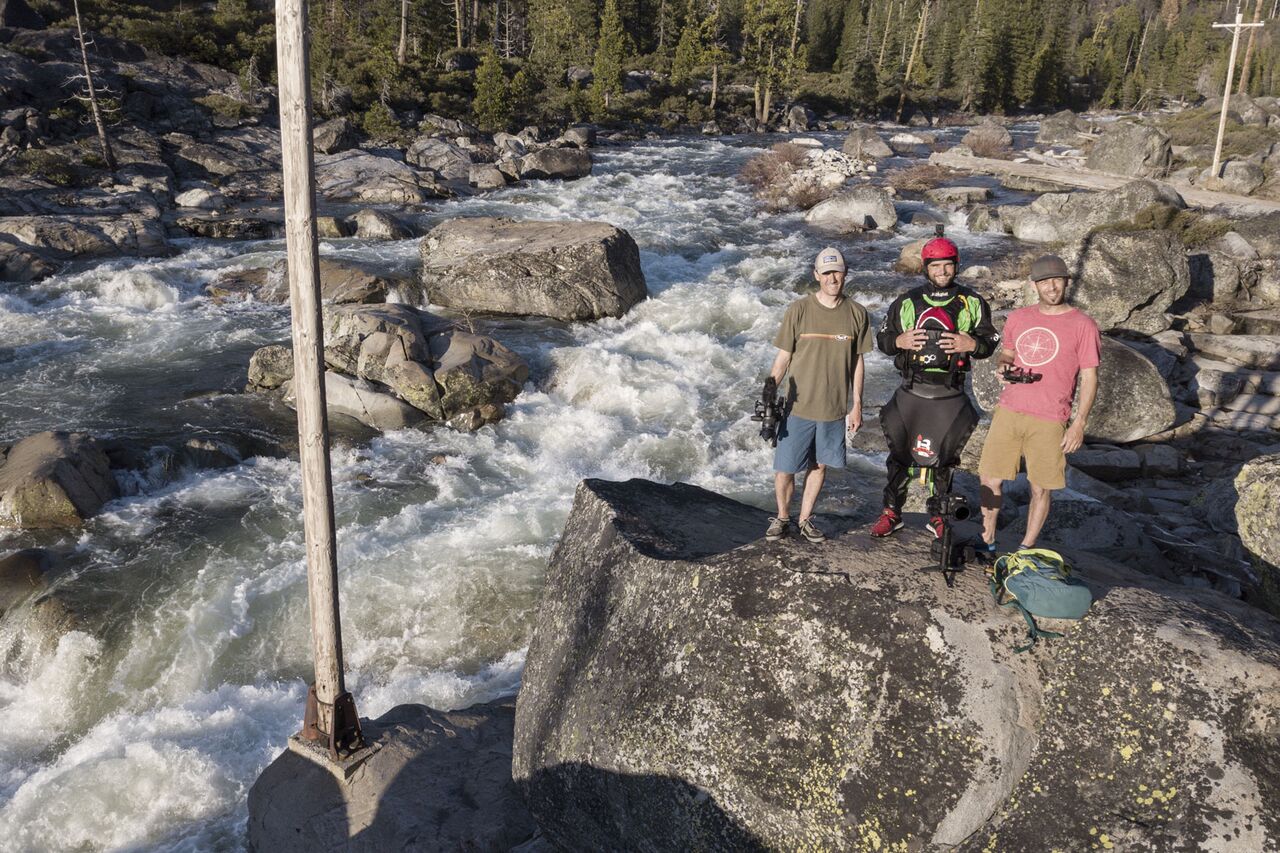
Duncan Mine: Class V Kayaking With Carson Lindsay


Outside Adventure to the Max friend Scott Blankenfeld is excited about his new projects showcasing athletes doing their thing on their home turf. Along with Robby Hogg, he created Duncan Mine, a Northern California Production Company, last year and began producing videos

In the first of their series, they profiled area world-class kayaker Carson Lindsay on the South Fork of the Yuba River near Donner Summit in California's Sierra Nevada.

"It's was pretty impressive watching him paddle these rapids at ease, considering he was basically paddling solo the entire time," wrote Blankenfeld in an email, "Growing up in Truckee, CA, this run is where he honed his whitewater kayaking skills and first started running Class V whitewater."

Courtesy of Scott Blankenfled
Blankenfled who spends his summers on the water following the action on the North, Middle and South Forks of the American River photographing whitewater rafting is looking forward to featuring more of these extreme athletes.

"We are looking to take this series across several different sports including Skiing/Snowboarding, Mountain Biking, Running, Surfing, etc," wrote Blankenfeld, "Each segment will highlight a new personality, sport, and location."
You can learn about Ducan Mine at www.duncanmine.com.  To follow Blankenfled and to check out more of his images go to www.scottblankenfeld.com. 

Want to see more about Outside Adventure to the Max. Follow us on Facebook and Instagram


Friday, January 4, 2019

ADVENTURE ON THE HORIZON: 2019


Rather than saying, good luck and good fortune to you this New Year, let me say work hard, laugh often, continue to learn, be kind, help others, pray for wisdom and then good fortune will see you this coming year. --  Robert Rivers

So what’s on your adventure horizon for 2019? As we stride into the new year, here are 5 trends we will see more of in the next year and beyond. Onward.
 

MORE BOATS IN MORE STORES

We don't have to tell you that over the past decade, that there has been an increased awareness in healthy lifestyles accompanied by a growing number of water sports enthusiasts across the US. According to the Outdoor Foundation's 2015 Special Report on Paddlesports, participation is on the rise, with almost 22 million Americans hitting the waterways in 2014—three million more than in 2010, the first year the study was completed.
"Paddlesports are gaining a lot of steam due in part to three factors: accessibility, affordability, and approachability," Joshua Silva, the Brand Marketing Manager at Jimmy Styks SUP Boards, told the website Very Well Fit.
Expect to see more inexpensive recreational kayaks and SUPs not just at the crowded boat launch but also in the big box stores like Costco and Sams Club along with other stores like Target, Walmart and TJ Maxx as the trend becomes more and more popular.


MORE PLACES TO ACCESS THE WATER


As the paddling community continues to grow to expect to see local municipality constructing long sought access areas to river and lakes. Paddling groups and community partners across the country are working to develop sites that will provide paddlers and boaters an improved put-in and take-out along popular stretches water.
"We've heard from the community that they would certainly like to see the river access improve at that historical boat launch, and I know that the folks that own dogs will appreciate an area," City of Eau Claire Forestry Director Todd Chwala, told WEAU-TV about a proposed project on the Chippewa River.

MORE SOLO TRIPS


“I wanted to follow a drop of water all the way from the Continental Divide (in Colorado) to the Gulf of Mexico,” Hannes Zacharias told the Kansas City Star about his 2,060-mile river trip from the Arkansas River’s headwaters near Leadville, Colo., to the Gulf of Mexico last summer.
It seems that those quiet me time paddling session are on almost every paddler's bucket list. Expect to see more tales of long journeys down river or around the circumference of a big lake alone. Who knows? Maybe they will inspire us to take even a trip of our own.


MORE WOMEN PADDLERS


Ladies were born to paddle. According to the Frontenac Outfitter's website, women represent about 45% of the kayaking enthusiast population and at that rate, their segment is growing, they will soon outnumber men. Kayak and SUP manufacturers, suppliers, and outfitters will continue to take note of this trend and eagerly adapt to meet their demands.
"I started paddling around and fell in love with it," wrote world-class kayaker Anna Levesque on her Mind Body Paddle website, "The challenge of having to balance combined with the body-alignment awareness and the great workout that it provides can’t be beat. Not to mention the fact that it allowed me to take my yoga practice to the water!"

Courtesy of Nick Troutman via Facebook
MORE HIGH TECH GEAR
Never before in paddling has there been so much high tech gadgetry. Pro paddlers now use everything from fitness trackers that can count paddling strokes to cameras to them keep their competitive edge. The kayakers use GoPro cameras while practicing tricks to get insight into their body mechanics after viewing it in slow-motion
“You can really figure out, ‘What am I doing?’” Pro-paddler Nick Troutman, told Digital Trends, “Either ‘What am I doing wrong’ or ‘What am I doing right? Why did this trick go bigger or better than the other trick?’ You can really slow it down and analyze exactly the difference between the moves.”

SHUTDOWN AND THE PARKS


The partial federal government shutdown, which began on Dec. 22 last month, has forced furloughs of hundreds of thousands of federal government employees and leaving many of our US National Parks without most of the rangers and others who staff campgrounds and otherwise keep parks running. Unlike shutdowns in some previous administrations, the Trump administration has left parks open to visitors despite the staff furloughs.

Courtesy of the Boulder Daily Camera News

At the Grand Canyon, the state of Arizona is paying for trash collection, custodial services for bathrooms and snow removal from sidewalks and trails. Stores and restaurants that aren’t run by the government are open. Campgrounds are open, but there is no reservation and check-in and check out process.
Meanwhile in California, at Yosemite National Park, trash collection, along with visitors’ centers and the park’s restrooms have been closed since the shutdown began. Joshua Tree has been operating with some staff, but beginning this past week, it's not allowing camping because of health concerns about near-capacity toilets. Earlier this week, Volunteers have been working to keep the beloved desert jewel as pristine as possible hauling out the trash and keeping toilets stocked with supplies hoping to keep the park accessible.

In Minnesota, officials at Voyageurs National Park issued a statement saying that "park roads ... may remain accessible to visitors, but will not be plowed.
Other affected parks in Minnesota include the St. Croix National Scenic Riverway, Grand Portage and Pipestone national monuments, and the Mississippi National River and Recreation Area.
Services at Upper Delaware Scenic and Recreational River and Ozark National Scenic Riverways in southeast Missouri have also been disrupted due to the shutdown.
“We’re deeply concerned about the approach the administration has taken,” told the New York Times, "John Garder, the senior budget director at the nonprofit National Parks Conservation Association. “Keeping the parks open is clearly causing threats to health and safety of visitors as well as wildlife and natural and cultural resources. We are worried about parks themselves, about park rangers who are demoralized, and the many businesses that depend on visitors.”

PADDLE DAY #141

Had a great time over the Christmas break paddling with my son Cole Carlson as I paddled to a new personal record of 141 paddling days in the calendar year. Onward to 2019.

Follow us on Facebook and  Instagram

Friday, December 28, 2018

UNEXPECTED CHALLENGES


Today we stand at the threshold of the unknown. Before us lies a new year, and we are going forward to take possession of it. Who knows what we will find? --L. B. E. Cowman


My friends who have gone down the Grand Canyon say it's truly a life-changing experience. From its breathtaking beauty to its adrenaline-pumping rapids, navigating the canyon is an exhilarating adventure.

“It’s still just reverberating in my brain and coursing through my soul, everything I felt in there,” paddler Steve Baskis told The Colorado Sun, "That place, it changed me. It washed away some things, … and it gave me so much. It tested me, and I came through energized, empowered, revitalized, invigorated., ”Everything you can think of. I want to do it again.”

This past September, Baskis a US Army veteran who was blinded by a roadside bomb in Iraq in 2008, kayaked the Grand Canyon with four other blind veterans with support from Team River Runner.

Think about that. Paddling the Grand Canyon is an amazing achievement in itself, but running it blind is just not just inspiring but extraordinary.

“They kept telling me I took the hero line,” Steve Baskis told The Colorado Sun, “I tell you, I was nervous about this whole thing, but then I got thrown into that washing machine and came out all right. I was like, ‘Wow. Let’s get this thing going!’”

After a breathtaking 12 day and 226 miles journey down the canyon, Bakis and crew emerged transformed.

"It makes you think about life and the different things you can do," Bakis said his interview, "Things really aren’t that impossible. If we can work together, we can figure out a way through anything."

Like the Colorado River, the year 2018, has had its share of both serene flat water and turbulent rapids for me. But, surrounded by my solid foundation of love support and community I have once again been able to ride out those unexpected bumps and challenges and come out all right on the other side.

I'm was so grateful this past year to once again paddle with likes of Dan Crandall, Kim Sprague, John Weed, Paul Camozzi, Thomas Bauman and the rest of the gang at Current Adventures Kayaking School and Trips and The River Store. Any outing with these guys is always a great day on the water.
We gave a sentimental goodbye to Eppies Great Race the area's annual summer celebration, however, added Sly Park Paddle Rentals on Jenkinson Lake to our lineup. In 2019, we're hoping to expand that service even more at its scenic venue. As for kayak racing on the Lower American River, Dan has pledged to somehow keep it going.

One thing leader Greg Weisman and  Bayside Adventure Sports can always guarantee at being a guiding light of faith and hope to those who take part in their many outside activities. With the manta, GOD created the Earth. RIDE IT. CLIMB IT. CATCH IT. EXPLORE IT. PROTECT IT, the church-based outreach put a special emphasis on protesting by taking part in several Earth Day events this past year, including a special one of their own. I only hope for many more adventures with them in the coming year.

A big thank you goes out to our 2018's guest bloggers, John D'Amelio,
Lacey Anderson, Tim Plamer, and Kate Hives,  for their insights and views this past year. They have certainly make OAM better by providing thoughtful and compelling views into the world of paddling. We certainly look forward to future posts from them in 2019.

I would also like to thank, Dirt Bag Paddlers & DBP Magazine Online, Canoe & Kayak Magazine, Paddling Magazine, AquaBound, American Rivers and NRS Web, for sharing my posts on their social media pages. It's always a fun Friday for me when post Outside Adventure to the Max. Thanks for helping spread the word about our weekly post.

My biggest thanks, of course, goes to my wife Debbie. I couldn't do any of my kayaking without her support and encouragement. Here is hoping she will finally get to stand up on her new paddleboard, after a mostly just be able to sit on it due to a foot injury.

As poet T.S. Eliot wrote, "What we call the beginning is often the end, and to make an end is to make a beginning. The end is where we start from."
I'll finish 2018 with a little over 140 days of paddling days spent on the water, a personal best for me. Broken up mostly into mini outings and weekends trips to my areas' lakes and rivers the year proved to be a never-ending journey of both planned and unanticipated trials and tribulations on the water that took my paddling into a new dimension.

“It’s one thing to pursue challenges," Baskis told The Colorado Sun, after his trip down the fabled canyon,&nfabledut it’s the unexpected challenges that really try us and change us and ultimately make us better. And there were a lot of unexpected things going on in the Grand Canyon.”

That's good advice going into the new year. Be ready for anything. The good and the bad. The stretches of rough water and the calm seas. Outside Adventure to the Max will be with you along the way.  Happy New Year.

Follow us on Facebook and  Instagram


Friday, December 21, 2018

OH CHRISTMAS TREE


The best Christmas trees come very close to exceeding nature. If some of our great decorated trees had been grown in a remote forest area with lights that came on every evening as it grew dark, the whole world would come to look at them and marvel at the mystery of their great beauty. ---Andy Rooney


It was Christmas time again and I was feeling a little trapped in the endless hustle and bustle of the holiday. I'd been working a lot of extra hours was suffering in the seasonal strain of holidays when I escaped to a little town holding a Christmas festival.

Christmas trees and lights, hay-rack rides, and a booth selling handcrafted old fashion ornaments and kids standing in line to see Santa. Down the way, I saw the Storyteller. Wearing his old leather jacket and trademark Fedora standing in front of a large bond fire roasting chestnut with a long-handled roaster. He had gathered quite an audience of both children and adults watching toast the popular seasonal treat.

"Are they done yet?" asked a child as I walked up to warmed my hands against the fire.

"Not yet," answered the Storyteller as he shooked the roaster, mixing the chestnuts around. He then looked at me and said "Hey, kid. How've you've been? I haven't seen you on the river lately."

"You know," I grunted, "I get pretty busy this time of year. I barely have time to enjoy Christmas."

"There is always time to enjoy Christmas," interjected the Storyteller. He gave his roaster a brisk shake and began this story.

Photo: National Archives
"Now the fellas on the work crew called him Rusty, but his folks always called him Russell," the Storyteller stipulated, "He was one of the two million young unemployed men to seek work with the Civilian Conservation Corps during the dark days of the Depression."

"The CCC,"  he pointed out, "Was a popular the New Deal program created by President Roosevelt to help employ the boys with jobs in conservation work. They worked planting trees, fighting wildfires, and building dams and roads mostly in the Americas' parks and forests. The men lived in camps earning only $30 dollars a month, most of which they sent home to their families. A bit like the army, the CCC provided the men with food, clothing, and medical care, along with job training."

 "It was President's Roosevelt's speech on the radio in 1933, that moved Russell to join up," the Storyteller theorized,  "When the President said, "It is time for each and every one of us to cast away self-destroying, nation-destroying efforts to get something for nothing and to appreciate that satisfying reward and safe reward come only through honest work."

Photo: National Archives

"They were known as "Roosevelt's Tree Army," acknowledged the Storyteller, "Russell worked planting trees in a western forest far from his home. They were long hard days of dirty work, but he knew he was earning a living and also doing something important for his country.  In the few lines he wrote to his parents he said, "I’m getting settled in here and look forward to sending you some money soon. This is sure a great program and Mr. Roosevelt did the right thing by getting it started."

"To be sure, there was some homesickness," insisted the Storyteller, "There always a bit of that of that sadness at being away from loved ones especially during the holidays. The camp commanders did his best to keep morale high by having the camp recreation hall decorated festively, leading sing-a-longs of Christmas carols and providing a Christmas dinner with turkey and apple pie."

"But for Russell, his favorite part of Christmas was decorating the tree," offered the Storyteller, "But, after planting hundreds of trees he just didn't have the heart to cut one down. He had heard about some fella in San Francisco by the named of Sandy Pratt who lifted the spirits of a sick 7-year-old neighbor by decorating a tree growing outside his home. Like all good ideas, it caught on and inspired others to do the same. Pratt encouraged everyone to light and decorate outdoor Christmas trees saying they would "act as beacons to prosperity and spread this cheerful message of confidence."

"So Russell, picked out a tree not too big and not too small close to camp so everyone would able to see it," recounted the Storyteller, "With decorations being sparse he painted several large pine cones green and red using from the leftover paint used on the on the camp's building. He strung some tin cans, spoons and a couple of rusty cowbells with wire and fashioned a wooden star to sit on top of the tree."

"It didn't have any lights," the Storyteller insisted, "Back then even the ones inside didn't have them either. But, it looked pretty good to Russell and to the boys in the camp as they gathered around it to sing Silent Night. They were all a long way from home that Christmas and just the sight of the tree brought them a little Christmas joy."

The Storyteller finished his story as he was pulling the roaster full of chestnuts off the fire and holding it out for the kids and adults to take one to try.
It was still hot as I picked one out and carefully removed its shell and let it cool a bit before popping it into my holiday. Its sweet, nutty flavor warmed up my holiday spirit."

"Hey kid," the Storyteller, looked up from his roaster with a slight pause gave me this advice, "No matter what, I think it’s wise to slow down, clear our heads and truly appreciate what matters this time of year. Merry Christmas."

"Merry Christmas to you too," I said.

Merry Christmas to all of you from Outside Adventure to the Max.

Friday, December 14, 2018

2018 IN REVIEW: PICTURES OF THE YEAR

And so for a time, it looked as if all the adventures were coming to an end, but that was not to be.---C. S. Lewis

It's that time of year again when I look back on some of my best images of the last year. Like always, it's difficult to narrow it down to just a dozen. I have so many favorites,  involving an anecdote or recollection behind each image captured while at the river or lake. From those fast times on the Lower American River to the slow-motion days at Sly Park each photo has its own story. So Yes it's hard to pick just a handful of pictures that stand out above the others.

A bent rack
"Someone once said that wherever I am is the perfect picture," long-time famed sports photographer Walter Iooss Jr told WPB Magazine, "I didn’t like the way it sounded but I believe that. It’s not that I’m positive of it deep down inside, it’s that I have to believe it. When you make that decision – ‘This is the place to go’ – you’ve got to live with it. There’s no alternative.”

As a young photojournalist, I followed the career of Iooss, the undisputed maestro of sports photography, boasting an exceptional career that spans over four decades. His iconic photographs of Muhammad Ali and Joe Frazier, the memorable “catch” by Dwight Clark during the 1982 NFC Championship Game, and dazzling portraits of basketball superstar Michael Jordan have been showcased in Sports Illustrated where he has over 300 covers to his credit.

Eppies Great Race training
“Photography is not a job. It’s a way of life,” he told WPB Magazine,  “I live it, think it, and feel it. It’s just in my DNA. I’ve always felt the moment."

I feel the same way. I just love taking pictures of special ripples in time and telling stories. For most of my life, I worked as a photojournalist in both print and broadcast media in a daily grind of trying to provide storytelling images or video to the folks reading the paper or watching their local TV news. At the end of every year, I would usually gather up my best of the best pictures or TV clips and send them off to an array of contests and judgings.

50+ plus paddle with Current Adventures
I won a few awards but never lost. As Iooss has said, the real joy of photography is in the discovery and magic of the moments like shots of Current Adventures' John Weed providing protection while shadowing a young paddler through his first rapid, an anniversary kiss on the water and an Eppies racing smile.
There is one of a lone paddler in the smokey veil of a wildfire and another of my wife Debbie paddling past the remnants of a past fire. There is fun on a glow paddle with Bayside Adventure Sports but also the slog of a portage back up river.

The Lower American River

“Passion, curiosity, excellence, the drive to always want to do it well,” he said Iooss, “You have to reinvent yourself. You can’t stay in one spot.”
So as 2018 draws to a close, I look back at some of my favorite moments I had kayaking with this past year.

You can follow us on Facebook and on Instagram

Current Adventures Kid Classes
Current Adventures Kid Class
Eppies Great Race training
Lake Jenkinson
Stumpy Meadows
Lake Natoma
Duck photobomb
Glow Paddle with Bayside Adventure Sports
The Lower American River

Friday, December 7, 2018

FREEZE WARNING


He said I wanna see you again. But I'm stuck in colder weather. Maybe tomorrow will be better --The Zac Brown Band

I was hoping to get one more day in. Just one more day on the water. The early winter weather had been typical and Fargo-like. The first snow had come early October, followed by another a week later. My days of paddling were quickly running out. My kayak world looked like a shaken snow globe. The dark waters of the Red River flowed past the banks of white snow in a dream-like setting. Along the shore, a thin layer of ice formed over the water. I can still recall the sound of my kayak's bow breaking through the ice. A reverberation of radio static and breaking glass echoed over the peaceful river. The Red was not a far cry from the Arctic.

"We hit a point where the ocean was all these pieces of broken ice," explorer Erik Boomer,  told Canoe and Kayak Magazine,  "It was just huge cliffs and bad ice, and the ice was traveling four or five miles a day, so a lot of movement. One idea we had was to jump out on a large piece of ice and sail it through a strait. So we hopped on some ice, set up camp, and joked about being on a big icebreaker ship."
He was recalling his epic trip with Jon Turk as they became the first paddlers to circumnavigate the 1,485-mile around Ellesmere Island, in the high Canadian Arctic in 2011. They skied and walked, towing their boats, about 850 miles, and paddled the remaining 600. "We both slipped in once—into the freezing cold Arctic Ocean. We made sure we always traveled real tight together and helped each other when we were seal launching off of a piece of ice, or climbing a piece of ice because there was always danger. And there was also danger of being squashed by the ice."

Ice would all too soon squash my plans. Thanksgiving weekend was mild and pleasant, with a little luck I thought, the weather would hold and I could paddle into December. But, a cold front rolled in freezing everything it touched. The river and lakes were entrenched with ice and snow, leaving the only memories, ghosts of days of the past season. Scottish poet Walter Scott had it right when he penned, "When dark December gloom's the day,  And takes our autumn joys away; When short and scant the sunbeam throws, Upon the weary waste of snows." My snow-covered kayak still loaded on the top of the van, was about to make its last and shortest voyage of the year... into the garage.

"One thing that we observed and talked about is how we were watching the ice change and the seasons literally go through these transitions," said Boomer, looking back on his experience in the Arctic, "It gave me a different perspective on changes and transitions. Changes and transitions are always difficult, you have to literally change your method working through it, but they’re bound to happen."

Now my boats have been loaded and unloaded off and on, and into the garage since last spring, but for me, there is something final about the last portage of the year. Lowering the kayak off the van's roof and onto the rack inside my single stall garage, I sandwiched it between two other boats along the wall. The van, only used for kayaking was then slowly backed into place in the garage as well, locked away for the winter. When the garage door shut, my kayaking was over until next spring.

"I actually don't even see my kayak when it's in storage. Your message prompted me to go out and confirm it's still where I left it!" said Heather Schmidt, who split her time between Fargo and Duluth, Minn, "What's painful for me, is seeing the water on the big lake so calm and seemingly inviting during the colder days. I don't have a wet-suit, so most of the year, paddling is out-of-bounds for me, but I still drive by the calm, beautiful water that is calling for a kayak to cut through its waters."

Withdrawal would soon occur. Psychiatrist William Glasser said, "We are driven by five genetic needs: survival, love and belonging, power, freedom, and fun." Glasser claims that positive addictions “strengthen us and make our lives more satisfying.” Positive addictions, like kayaking, enhance life. They also help us to “live with more confidence, more creativity, and more happiness, and usually in much better health."
When I stopped paddling for the season,  symptoms of kayak withdrawal seem to emerge, and from what I was told there was no cure.
"There is one thing I should warn you about before you decide to get serious about canoeing." warned paddling guru Bill Mason, "You must consider the possibility of becoming totally and incurably hooked on it. You must also face the fact that every fall about freeze-up time you go through a withdrawal period as you watch the lakes and rivers icing over one by one. Cross-country skiing and snowshoeing can help a little to ease the pain, but they won’t guarantee a complete cure."

It was an unusually long winter that year in Fargo-Moorhead. Not that that wasn't out of the ordinary. I had been there for nearly 30 years and only recall a few mild ones. At -13 below it hard to find anything but frozen water anywhere. The Red River had the look of a ribbon-thin glacier splitting the two cites in half. Historians say, they use to set up bleachers on the ice and have horse-drawn sleigh races along a section of the river. Only water trickles over the rocks of the Midtown dam producing a billowing layer of ice fog gaping between the two ice masses. On cross-country ski outings along the river, I would often ponder those paddling days.
"Winter is a time of promise because there is so little to do," said writer Stanley Crawford, "Or because you can now and then permit yourself the luxury of thinking so."

Canadian sea kayaker Harvey Chris Wittenberg, put this way, "Every year lands up being a little unique with different memories," he wrote in an email,  "In Canada where six months a year we are locked in with ice. Well, it makes you appreciate the kayaking a little more. It lands up being a time to reflect. Dream up bucket-list plans for next season as well as think about new equipment and setting goals for the upcoming season."

I'm a Californian now. I can paddle every day all year-long which I still find remarkable and almost unexpected. There is no ice or snow unless I want to take my kayak up into the Sierra-Nevada Mountains for winter paddle. The thought that had crossed my mind.

During my last winter in Fargo while in a long-distance courtship with my soon to be wife, I remember how she would send me shots along the American River, coaxing me to come to California. Folks paddling along on a sunny day, while I looked out my window saw the bleakness of winter. It was like looking at a menu and not being able to order anything but frozen fish sticks while counting the days down to spring.

"So it just sorta became normal life." said Boomer, summing up his 104 days in the Arctic with Turk,  "There wasn’t anything else, and that’s really what life is. You’re there. And I think in working through those challenges, I’m hoping to bring that into my everyday life—the adventure, the excitement, the specialness of every single day, and continually taking on challenges and having fun with them.”

This article was originally published in Outside Adventure to the Max December 4. 2015